
%402x.svg)
Ship Shape-
Smooth sailing
For every guest.
A branching eLearning module where cruise line guest services agents balance customer relations with policy limitations.
The module trains agents to stick to policy, even when guest's attitude makes bending the rules feel like the easier call.
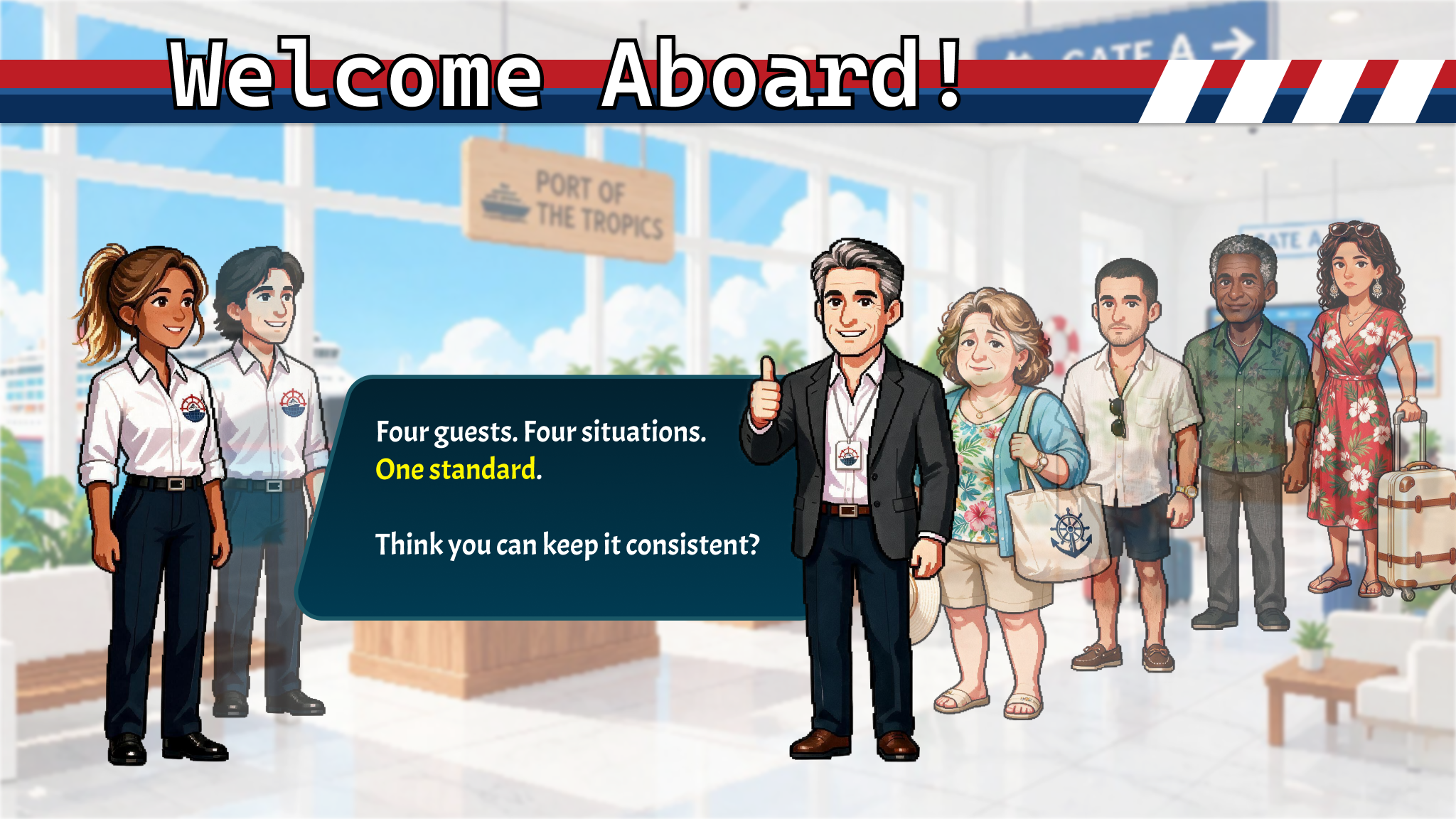
The policy was the same for every guest. Whoever pushed hardest got the exception.
Agents didn't need more rules to follow. They needed practice staying steady while still hearing the guest out.
- Tell the difference between a guest's tone and what they're actually entitled to
- Use the tools they'd have on the job instead of trying to memorize everything
- Bounce back from a bad call on one guest instead of repeating it with the next
My Process
How a plan and an action map turned into an actual scene-by-scene script.
%402x%20(2).svg)
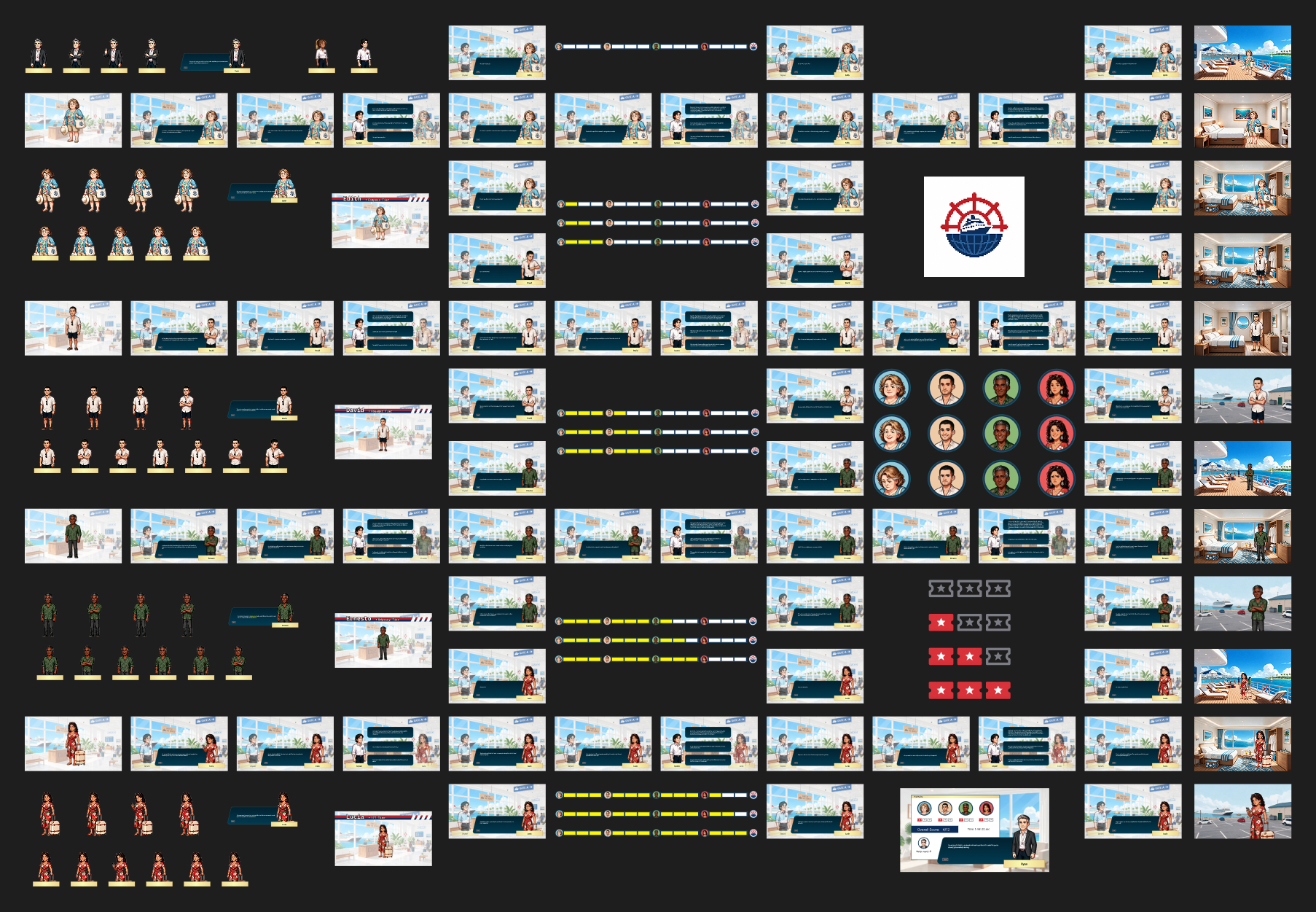
Every guest conversation comes down to a choice between three responses, scored as Best, Fine, or Incorrect, since real guest service is rarely a clean right-or-wrong. Whatever the agent picks, the guest reacts to it before the module moves on, so the choice has a visible consequence instead of just a score ticking up or down somewhere unseen. After that, Ryan steps in with a short, specific note on what worked or what didn't. He's coaching, not grading.
.png)
Each guest represents a different way this policy breaks down in real life, starting with a simple case any agent should get right, and ending with Lucia, a guest built specifically to not have an obvious answer. She's the one meant to make an agent actually think instead of guess.
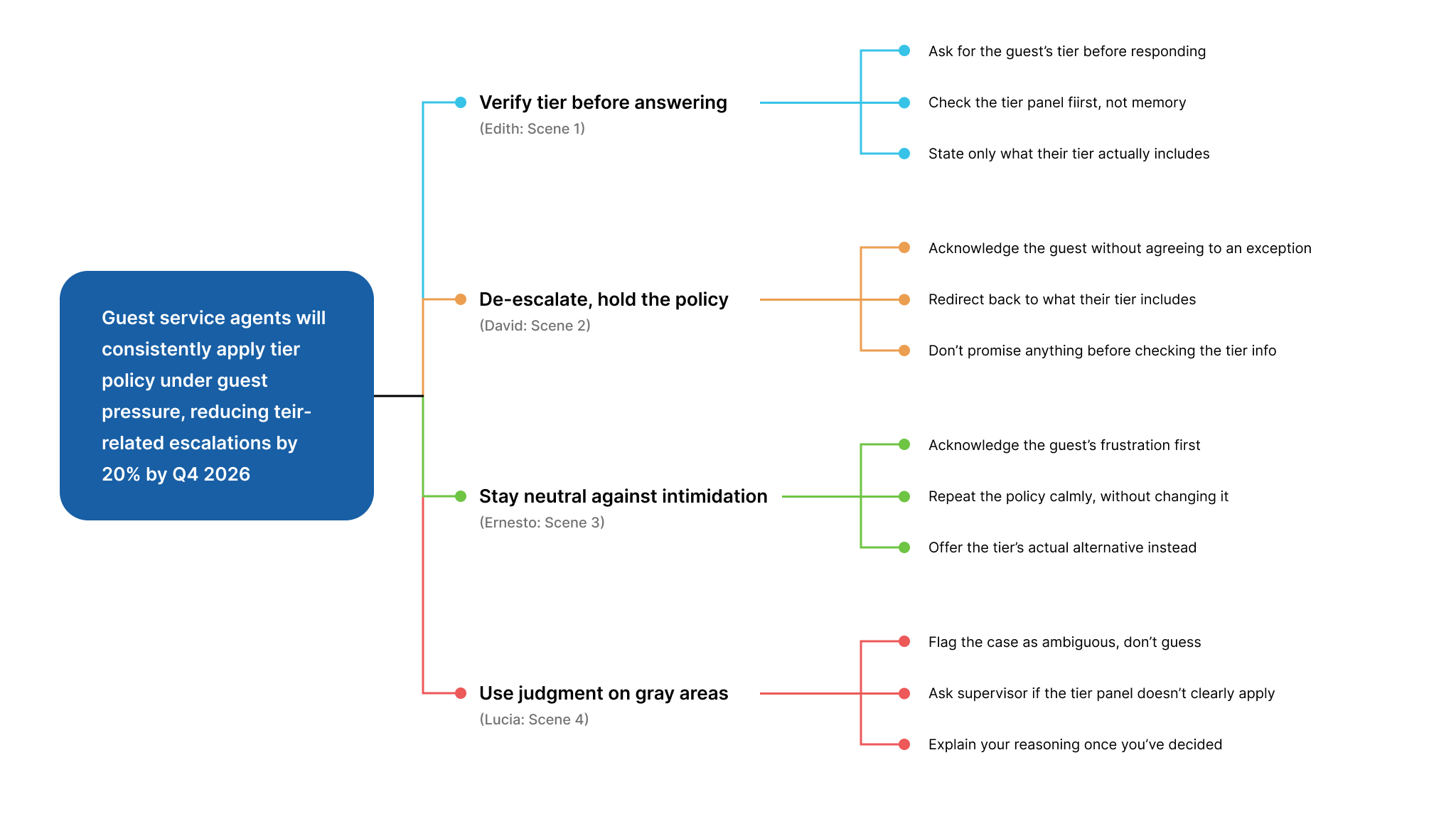
I started by figuring out the specific ways agents were getting this wrong, and built four guest personas around those patterns, going from a clean, obvious case up to a real gray-area guest where there isn't an obviously right answer. From there I built the branching logic and scoring, designed the visuals, and put the whole thing together in Storyline, going back through the debriefs and feedback more than once until the coaching actually felt like coaching. I didn't have an outside subject matter expert on this one. Instead I leaned on ten-plus years of working in applied behavior analysis, where you learn pretty quickly that knowing a rule and following it under pressure are two different things.
In Storyline, each guest's score is tracked as its own variable, feeding into a final report card. If an agent gets a question wrong, the module doesn't stop or throw up a hard "incorrect" screen. It just keeps going, so one bad call with one guest doesn't tank the whole experience or make someone want to quit halfway through. At the end, the report card breaks down how the agent did across all four guests, points out where things went sideways, and lets them retry for a better score if they want. The ending is one more coaching moment, not a final verdict.
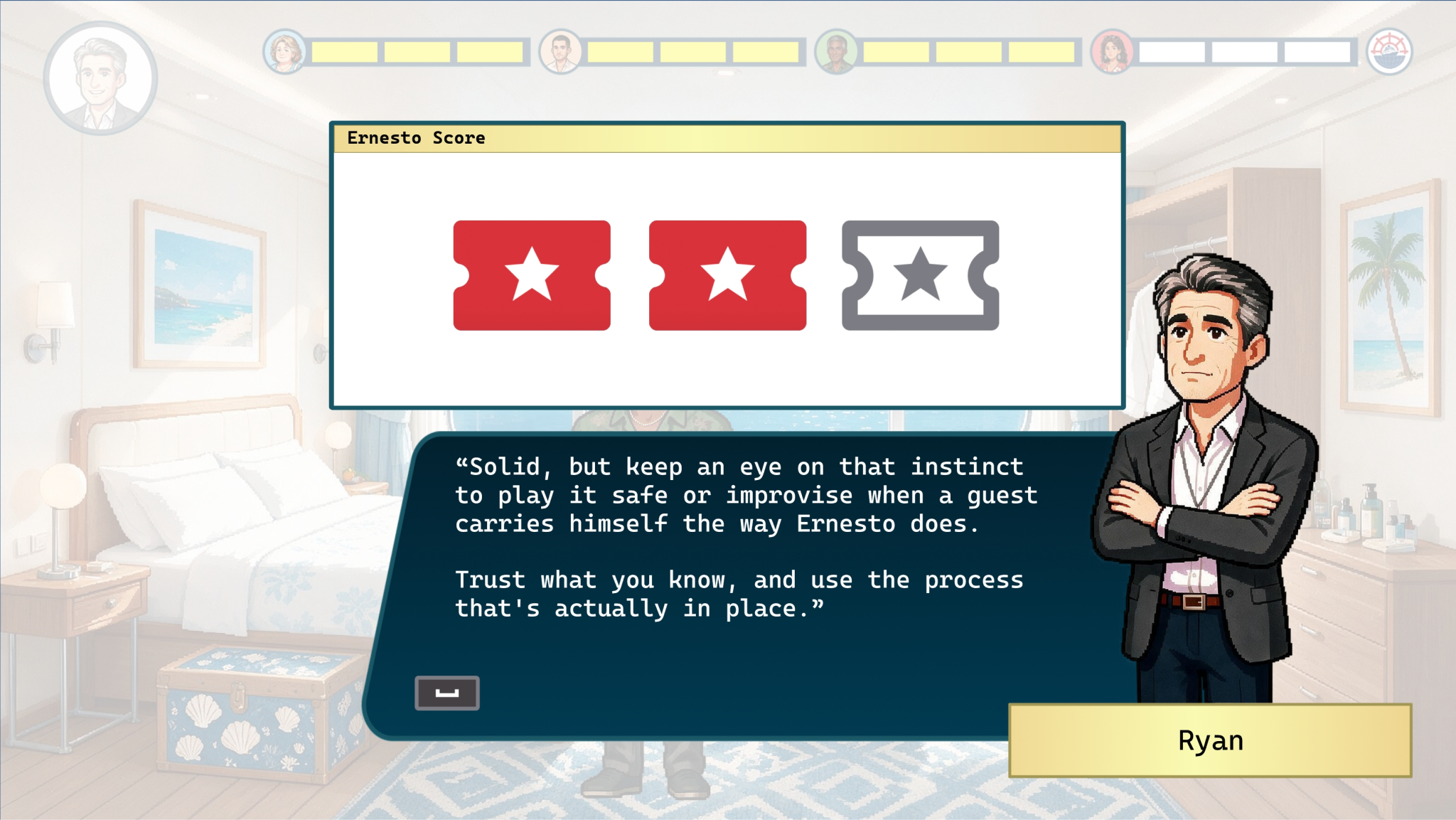
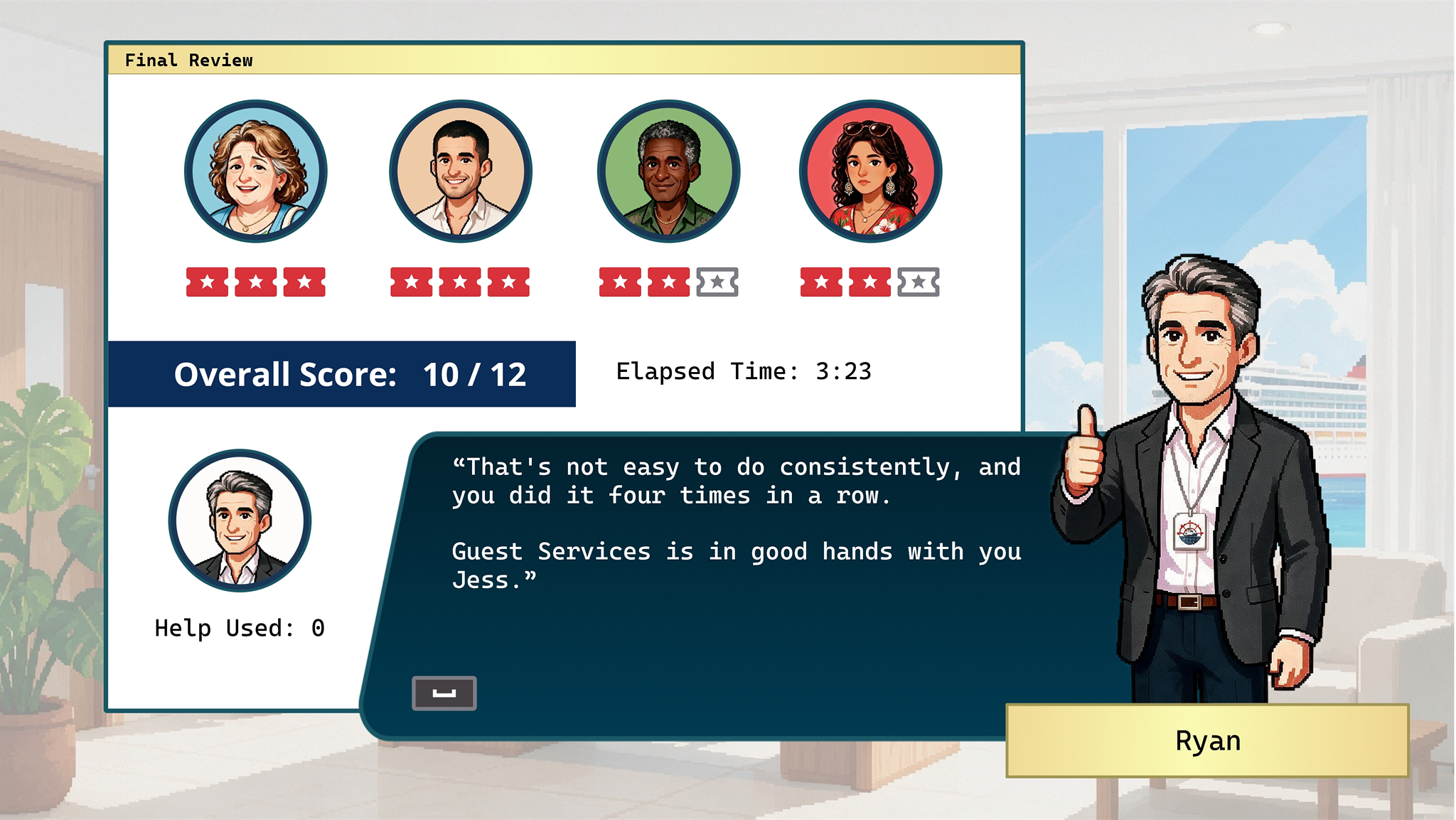
A progress bar at the top shows how far the agent is from the next guest and from the end, so there's always a sense of how much is left instead of it feeling open-ended. Each guest conversation is short on purpose, one concern at a time, so the agent's attention stays on the decision instead of getting lost reading. Help and the tier reference panel are available the whole time, because the point was never to test memorization. It's to build a habit of checking the reference and still making the right call while a guest is in front of you, which is what the job actually looks like. Text and background colors were checked for contrast against WCAG guidelines, and buttons and the reference panel have clear hover states so it's obvious what's clickable.
Design Decisions
Every visual and technical choice was designed to keep users thinking, not memorizing.
Outcome
The finished module, and what building it taught me about designing for judgment instead of recall.
Working on this sharpened my Storyline skills, especially branching logic and variable-based scoring. But the bigger thing I took away was a clearer sense of how I think about instructional design: as a behavior problem first, not just a content problem.
.png)